# Black Fog: An Interview With Jon Padgett
## Metadata
- Author: [[Thomas Ligotti Online]]
- Full Title: Black Fog: An Interview With Jon Padgett
- Category: #articles
- Summary: insert summary
- My notes:
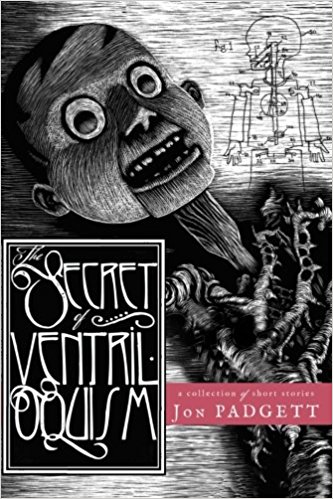
- Summary: Jon Padgett’s debut collection, The Secret of Ventriloquism, was released by Dunhams Manor in late 2016, and enjoyed instant success among readers of the horrific and the weird.
- URL: http://thefanzine.com/black-fog-an-interview-with-jon-padgett/
## LLM Chats
## NotebookLM
## LLM Audio
## Highlights
> **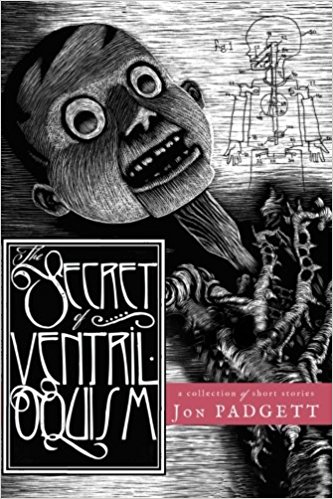DP:** I’m glad you mentioned the influence of Buddhism and its relation to Being. Reading through your book, I thought often of the Buddhists’ belief that no living creature possesses a “self.” A few of the pieces, namely “Origami Dreams,” “20 Simple Steps to Ventriloquism,” and “Organ Void,” can be read as being concerned with a horror of the self, or the consciousness of experience. As such, there is also frequently an unseen reality—a reality of unfathomable depth, as Thomas Metzinger might say—that threatens to corrupt, or perhaps claim, the identities of your characters. Is this something that arises from your background as a ventriloquist? And could you tell me a bit about your history with your craft? ([View Highlight](https://read.readwise.io/read/01kdmjfhkjm7tn3gmwbddyx1hz))
> I love reading fiction aloud and hearing it read. One of my proudest moments in the ’90s was recording Thomas Ligotti’s “The Tsalal” on cassette tape, sending the story to him and getting positive feedback about it. He told me that hearing my recording made him reevaluate his own story, which he had never liked before he heard me read it aloud. The spoken word is not superior to the written one, but both spoken and written formats present unique dimensions of a tale. As I was recording each story in my collection, I sought to channel that story’s specific narrator, whether from a first-, second-, or third-person perspective. ([View Highlight](https://read.readwise.io/read/01kdmke429grq0ertn6sxtynq5))
> Post-creation editing is, to me, the second most enjoyable part of the process. I can’t tell you how much I dug stripping “20 Simple Steps to Ventriloquism” from 14,000 to 4,500 words—honing it down to its essential elements. To me, a single piece of writing is never finished, never sacrosanct. It can always be tightened, improved. This belief was, I’m sure, incredibly frustrating for my publisher in the lead up to the book launch. ([View Highlight](https://read.readwise.io/read/01kdmkm2d62yj1ashh8dvacd8z))
> If Barron opened the door in the early 2000s, writers like S. P. Miskowski, Simon Strantzas, Gemma Files, Paul Tremblay, John Langan, and others nailed it to the wall in the years that followed. As for other stars that I see leading the way, Matthew M. Bartlett, Christopher Slatsky, Kristi DeMeester, and Nicole Cushing immediately come to mind, though I could also mention at least a dozen more authors. Again, I’m looking from the inside out right now, and we’ll be able to evaluate this potential “weird renaissance” more clearly twenty years down the road with the clarity of hindsight. ([View Highlight](https://read.readwise.io/read/01kdmkq9wzkdfvzjpycz72gp99))
> Ventriloquist dummies are simply too much like us, both alive and dead, and that’s what makes them terrifying. Aren’t we all terrified to one degree or another by our *own* inevitable dummyhood? Isn’t that both the struggle and paradox of our collective existence as sentient organisms? ([View Highlight](https://read.readwise.io/read/01kdmjk1ptvd5h269f805g2ckq))
> My dreams are also imaginary, but I derive a personal sense of meaning from them, even when they involve suffering. The waking world is no different, even if it is (usually) more stable than the dream world. Most of us have hard-wired survival instincts, cultivated by both nature and nurture, and I’m no exception—dreaming or awake. Consciousness has value to me. ([View Highlight](https://read.readwise.io/read/01kdmjsc9v18e69e2396zw1zfn))