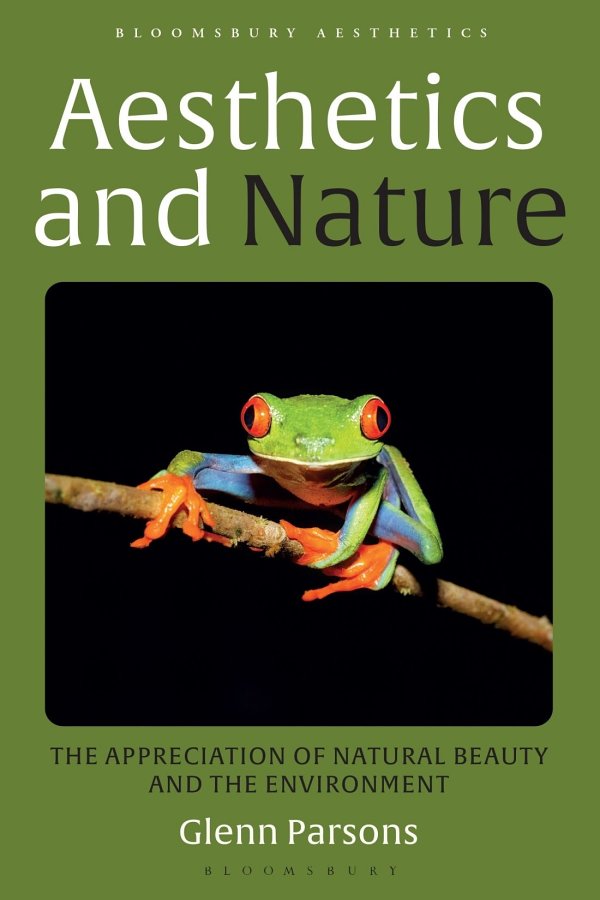
# Aesthetics and Nature
## Metadata
- Author: [[Glenn Parsons]]
- Full Title: Aesthetics and Nature
- Category: #books
- Summary: insert summary
- My notes:
- Summary: The chapter discusses different ways to appreciate nature aesthetically, focusing on the idea of Formalism, which emphasizes viewing nature as pure form. It also explores the science-based view that suggests all natural things have aesthetic value when understood through scientific knowledge. Additionally, it introduces pluralist perspectives that allow for multiple valid approaches to aesthetic appreciation of nature.
- Source File: Aesthetics and Nature by Glenn Parsons.epub
## LLM Chats
## NotebookLM
## LLM Audio
## Highlights
> [64](private://read/01jwb3tstmvxdgebkfm6fmn4y4/#fnt-64) On love and beauty, see Nehamas ([2007](private://read/01jwb3tstmvxdgebkfm6fmn4y4/#BLO-BIB_CIT00315)). ([View Highlight](https://read.readwise.io/read/01jwb5r5s8d3pxsdj3nv65assm))
## New highlights added June 15, 2025 at 9:13 PM
> On the contrary, it seems that understanding the nature and structure of celestial objects renders one’s experience more sublime than it would be otherwise. ([View Highlight](https://read.readwise.io/read/01jxt2adznz16ptcs7ak4ffser))
> Rather than invoking a story about epistemic failure, I suggest we instead return to the fundamental idea, emphasized by Sircello, of *epistemic transcendence*. In elaborating this idea, philosophers have focused on cognitive failure, but transcendence can be interpreted in terms of cognitive success as well. We could understand a sublime experience as one that involves awareness of a qualitative expansion of our epistemic access to reality (or alternatively, of our transcending a significant epistemic boundary). Call this the *epistemic expansion* account of the sublime. ([View Highlight](https://read.readwise.io/read/01jxt2bc8qr1avejs52ejhn17n))
> This feeling of ‘expanded access’ accounts for the oft-noted ‘positive valence’ of sublime experience: it is gratifying, invigorating, and even thrilling to experience such an ‘epistemic shift’. Note that this account requires that the shift be *qualitative*: if I climb a hill and see a part of the landscape that I’ve never seen before, my epistemic horizon has expanded, as it were, but unless this is a qualitative change my experience will not be sublime. Certainly, what counts as a qualitative shift will be importantly dependent on the particular observer. Just as the Alps eventually lost their dramatic appeal to the Victorians, so the astronomer who is intimately familiar with the night sky may lose a sense of its sublimity over time. ([View Highlight](https://read.readwise.io/read/01jxt2dj4rsv91s50y1x2w6g0c))