**[[Cormac McCarthy]]** (born **Charles Joseph McCarthy Jr.**; July 20, 1933 – June 13, 2023) was an American writer who wrote twelve novels, two plays, five screenplays, and three short stories, spanning the [Western](https://www.wikiwand.com/en/articles/Western_fiction "Western fiction"), [postapocalyptic](https://www.wikiwand.com/en/articles/Apocalyptic_and_post-apocalyptic_fiction "Apocalyptic and post-apocalyptic fiction"), and [southern gothic](https://www.wikiwand.com/en/articles/Southern_Gothic "Southern Gothic") genres. His works often include graphic depictions of violence, and his [[writing style]] is characterised by a sparse use of punctuation and attribution. He is widely regarded as one of the greatest American novelists.[^cowley-1][^2][^3]
McCarthy was born in [Providence, Rhode Island](https://www.wikiwand.com/en/articles/Providence,_Rhode_Island "Providence, Rhode Island"), although he was raised primarily in [Tennessee](https://www.wikiwand.com/en/articles/Tennessee "Tennessee"). In 1951, he enrolled in the [University of Tennessee](https://www.wikiwand.com/en/articles/University_of_Tennessee "University of Tennessee"), but dropped out to join the [U.S. Air Force](https://www.wikiwand.com/en/articles/United_States_Air_Force "United States Air Force"). His [debut novel](https://www.wikiwand.com/en/articles/Debut_novel "Debut novel"), *[The Orchard Keeper](https://www.wikiwand.com/en/articles/The_Orchard_Keeper "The Orchard Keeper")*, was published in 1965. Awarded literary grants, McCarthy was able to travel to southern Europe, where he wrote his second novel, *[Outer Dark](https://www.wikiwand.com/en/articles/Outer_Dark "Outer Dark")* (1968). *[Suttree](https://www.wikiwand.com/en/articles/Suttree "Suttree")* (1979), like his other early novels, received generally positive reviews, but was not a commercial success. A [MacArthur Fellowship](https://www.wikiwand.com/en/articles/MacArthur_Fellows_Program "MacArthur Fellows Program") enabled him to travel to the American Southwest, where he researched and wrote his fifth novel, *[[[Blood Meridian]]](https://www.wikiwand.com/en/articles/Blood_Meridian "[[Readwise/Books/Blood Meridian]]")* (1985). Although it initially garnered a lukewarm critical and commercial reception, it has since been regarded as his *[magnum opus](https://www.wikiwand.com/en/articles/Magnum_opus "Magnum opus")*, with some labeling it the [Great American Novel](https://www.wikiwand.com/en/articles/Great_American_Novel "Great American Novel").
McCarthy first experienced widespread success with *[All the Pretty Horses](https://www.wikiwand.com/en/articles/All_the_Pretty_Horses_\(novel\) "All the Pretty Horses (novel)")* (1992), for which he received both the [National Book Award](https://www.wikiwand.com/en/articles/National_Book_Award "National Book Award")[^4] and the [National Book Critics Circle Award](https://www.wikiwand.com/en/articles/National_Book_Critics_Circle_Award "National Book Critics Circle Award"). It was followed by *[The Crossing](https://www.wikiwand.com/en/articles/The_Crossing_\(McCarthy_novel\) "The Crossing (McCarthy novel)")* (1994) and *[Cities of the Plain](https://www.wikiwand.com/en/articles/Cities_of_the_Plain_\(novel\) "Cities of the Plain (novel)")* (1998), completing *[The Border Trilogy](https://www.wikiwand.com/en/articles/The_Border_Trilogy "The Border Trilogy")*. His 2005 novel *[No Country for Old Men](https://www.wikiwand.com/en/articles/No_Country_for_Old_Men_\(novel\) "No Country for Old Men (novel)")* received mixed reviews. His 2006 novel *[The Road](https://www.wikiwand.com/en/articles/The_Road "The Road")* won the 2007 [Pulitzer Prize for Fiction](https://www.wikiwand.com/en/articles/Pulitzer_Prize_for_Fiction "Pulitzer Prize for Fiction") and the [James Tait Black Memorial Prize](https://www.wikiwand.com/en/articles/James_Tait_Black_Memorial_Prize "James Tait Black Memorial Prize") for Fiction.
Many of McCarthy's works have been adapted into film. The 2007 film adaptation of *[No Country for Old Men](https://www.wikiwand.com/en/articles/No_Country_for_Old_Men "No Country for Old Men")* was a critical and commercial success, winning four [Academy Awards](https://www.wikiwand.com/en/articles/Academy_Awards "Academy Awards"), including [Best Picture](https://www.wikiwand.com/en/articles/Academy_Award_for_Best_Picture "Academy Award for Best Picture"). The films *[All the Pretty Horses](https://www.wikiwand.com/en/articles/All_the_Pretty_Horses_\(film\) "All the Pretty Horses (film)")*, *[The Road](https://www.wikiwand.com/en/articles/The_Road_\(2009_film\) "The Road (2009 film)")*, and *[Child of God](https://www.wikiwand.com/en/articles/Child_of_God_\(film\) "Child of God (film)")* were also adapted from his works of the same names, and *Outer Dark* was turned into a 15-minute short. McCarthy had a play adapted into a 2011 film, [*The Sunset Limited*](https://www.wikiwand.com/en/articles/The_Sunset_Limited_\(film\) "The Sunset Limited (film)").
McCarthy worked with the [Santa Fe Institute](https://www.wikiwand.com/en/articles/Santa_Fe_Institute "Santa Fe Institute"), a multidisciplinary research center, where he published the essay "[[[The Kekulé Problem]]](https://www.wikiwand.com/en/articles/The_Kekul%C3%A9_Problem "[[The Kekulé Problem]]")" (2017), which explores the [human unconscious](https://www.wikiwand.com/en/articles/Unconscious_mind "Unconscious mind") and the [origin of language](https://www.wikiwand.com/en/articles/Origin_of_language "Origin of language"). He was elected to the [American Philosophical Society](https://www.wikiwand.com/en/articles/American_Philosophical_Society "American Philosophical Society") in 2012.[^5] His final novels, *[[[The Passenger]]](https://www.wikiwand.com/en/articles/The_Passenger_\(McCarthy_novel\) "[[Readwise/Books/The Passenger]] (McCarthy novel)")* and *[Stella Maris](https://www.wikiwand.com/en/articles/Stella_Maris_\(novel\) "Stella Maris (novel)")*, were published on October 25, 2022, and December 6, 2022, respectively.[^alter-6]
### Early life
Charles Joseph McCarthy Jr.[^newmillenniumwritings-7] was born in [Providence, Rhode Island](https://www.wikiwand.com/en/articles/Providence,_Rhode_Island "Providence, Rhode Island"), on July 20, 1933, one of six children of Gladys Christina McGrail and Charles Joseph McCarthy.[^kns1-8] His family was [Irish Catholic](https://www.wikiwand.com/en/articles/Irish_Catholic "Irish Catholic").[^9] In 1937, the family relocated to [Knoxville, Tennessee](https://www.wikiwand.com/en/articles/Knoxville,_Tennessee "Knoxville, Tennessee"), where his father worked as a lawyer for the [Tennessee Valley Authority](https://www.wikiwand.com/en/articles/Tennessee_Valley_Authority "Tennessee Valley Authority").[^bio-10] The family first lived on Noelton Drive in the upscale [Sequoyah Hills](https://www.wikiwand.com/en/articles/Sequoyah_Hills,_Tennessee "Sequoyah Hills, Tennessee") subdivision, but by 1941, had settled in a house on Martin Mill Pike in [South Knoxville](https://www.wikiwand.com/en/articles/South_Knoxville "South Knoxville").[^burned-11] McCarthy later said, "We were considered rich because all the people around us were living in one- or two-room shacks."[^woodward-12] Among his childhood friends was Jim Long (1930–2012), who was later depicted as J-Bone in *Suttree*.[^jbone-13]
McCarthy attended St. Mary's Parochial School and [Knoxville Catholic High School](https://www.wikiwand.com/en/articles/Knoxville_Catholic_High_School "Knoxville Catholic High School"),[^14] and was an [altar boy](https://www.wikiwand.com/en/articles/Altar_boy "Altar boy") at Knoxville's [Church of the Immaculate Conception](https://www.wikiwand.com/en/articles/Church_of_the_Immaculate_Conception_\(Knoxville,_Tennessee\) "Church of the Immaculate Conception (Knoxville, Tennessee)").[^jbone-13] As a child, McCarthy saw no value in school, preferring to pursue his own interests. He described a moment when his teacher asked the class about their hobbies. McCarthy answered eagerly, as he later said, "I was the only one with any hobbies and I had every hobby there was ... name anything, no matter how esoteric. I could have given everyone a hobby and still had 40 or 50 to take home."[^adams-15]
In 1951, he began attending the [University of Tennessee](https://www.wikiwand.com/en/articles/University_of_Tennessee "University of Tennessee"), studying [liberal arts](https://www.wikiwand.com/en/articles/Liberal_arts "Liberal arts").[^16] He became interested in writing after a professor asked him to repunctuate a collection of eighteenth-century essays for inclusion in a textbook.[^kushner-17] McCarthy left college in 1953 to join the [U.S. Air Force](https://www.wikiwand.com/en/articles/United_States_Air_Force "United States Air Force"). While stationed in [Alaska](https://www.wikiwand.com/en/articles/Alaska "Alaska"), McCarthy read books voraciously, which he said was the [[first time]] he had done so.[^woodward-12] He returned to the University of Tennessee in 1957, where he majored in English and published two stories, "Wake for Susan" and "A Drowning Incident" in the student literary magazine, *The Phoenix*, writing under the name C. J. McCarthy, Jr. For these, he won the [Ingram-Merrill Award](https://www.wikiwand.com/en/articles/Ingram_Merrill_Foundation "Ingram Merrill Foundation") for creative writing in 1959 and 1960. In 1959, McCarthy dropped out of college and left for Chicago.[^bio-10][^woodward-12]
For purposes of his writing career, McCarthy changed his first name from Charles to [Cormac](https://www.wikiwand.com/en/articles/Cormac "Cormac") to avoid confusion, and comparison, with ventriloquist [Edgar Bergen](https://www.wikiwand.com/en/articles/Edgar_Bergen "Edgar Bergen")'s dummy [Charlie McCarthy](https://www.wikiwand.com/en/articles/Charlie_McCarthy "Charlie McCarthy").[^18] "Cormac" is the Gaelic version of "Charles".[^19] Cormac had been a family nickname given to his father by his Irish aunts.[^woodward-12] Other sources say he changed his name to honor the Irish chieftain [Cormac MacCarthy](https://www.wikiwand.com/en/articles/Cormac_Laidir_MacCarthy,_9th_Lord_of_Muskerry "Cormac Laidir MacCarthy, 9th Lord of Muskerry"), who constructed [Blarney Castle](https://www.wikiwand.com/en/articles/Blarney_Castle "Blarney Castle").[^20]
After marrying fellow student Lee Holleman in 1961, McCarthy moved to what Lee's obituary calls "a shack with no heat and running water in the foothills of the [Smoky Mountains](https://www.wikiwand.com/en/articles/Smoky_Mountains "Smoky Mountains") outside of Knoxville." There, the couple had a son, Cullen, in 1962.[^:0-21] When writer [James Agee](https://www.wikiwand.com/en/articles/James_Agee "James Agee")'s childhood home was being demolished in Knoxville that year, McCarthy used the site's bricks to build fireplaces inside his [Sevier County](https://www.wikiwand.com/en/articles/Sevier_County,_Tennessee "Sevier County, Tennessee") shack.[^22] Lee moved to Wyoming shortly after, where she filed for divorce from McCarthy.[^:0-21]
### Early writing career (1965–1991)

*[The Orchard Keeper](https://www.wikiwand.com/en/articles/The_Orchard_Keeper "The Orchard Keeper")* (1965) was McCarthy's first novel.
[Random House](https://www.wikiwand.com/en/articles/Random_House "Random House") published McCarthy's first novel, *[The Orchard Keeper](https://www.wikiwand.com/en/articles/The_Orchard_Keeper "The Orchard Keeper")*, in 1965.[^woodward-12] He had finished the novel while working part time at an auto-parts warehouse in Chicago and submitted the manuscript "blindly" to Albert Erskine of Random House.[^woodward-12][^cormac_country-23] Erskine continued to edit McCarthy's work for the next 20 years.[^cormac_country-23] Upon its release, critics noted its similarity to the [work of Faulkner](https://www.wikiwand.com/en/articles/William_Faulkner_bibliography "William Faulkner bibliography") and praised McCarthy's striking use of imagery.[^24][^25] *The Orchard Keeper* won a 1966 [William Faulkner Foundation Award](https://www.wikiwand.com/en/articles/William_Faulkner_Foundation#Writing_awards "William Faulkner Foundation") for notable first novel.[^newsweek.com-26]
While living in the [French Quarter](https://www.wikiwand.com/en/articles/French_Quarter "French Quarter") in [New Orleans](https://www.wikiwand.com/en/articles/New_Orleans "New Orleans"), McCarthy was evicted from a $40-a-month room for failing to pay his rent.[^woodward-12] When he traveled the country, McCarthy always carried a 100-watt bulb in his bag so he could read at night, no matter where he was sleeping.[^adams-15]
In the summer of 1965, using a Traveling Fellowship award from [The American Academy of Arts and Letters](https://www.wikiwand.com/en/articles/The_American_Academy_of_Arts_and_Letters "The American Academy of Arts and Letters"), McCarthy shipped out aboard the liner *Sylvania* hoping to visit Ireland. On the ship, he met Englishwoman Anne DeLisle, who was working on the ship as a dancer and singer. In 1966, they were married in England. Also in 1966, he received a [Rockefeller Foundation](https://www.wikiwand.com/en/articles/Rockefeller_Foundation "Rockefeller Foundation") grant, which he used to travel around Southern Europe before landing in [Ibiza](https://www.wikiwand.com/en/articles/Ibiza "Ibiza"), where he wrote his second novel, *[Outer Dark](https://www.wikiwand.com/en/articles/Outer_Dark "Outer Dark")* (1968). Afterward, he returned to the United States with his wife, where *Outer Dark* was published to generally favorable reviews.[^persp-27]

McCarthy in 1968
In 1969, the couple moved to [Louisville, Tennessee](https://www.wikiwand.com/en/articles/Louisville,_Tennessee "Louisville, Tennessee"), and purchased a dairy barn,[^28] which McCarthy renovated, doing the stonework himself.[^persp-27] According to DeLisle, the couple lived in "total poverty", bathing in a lake. DeLisle claimed, "Someone would call up and offer him $2,000 to come speak at a university about his books. And he would tell them that everything he had to say was there on the page. So we would eat beans for another week."[^woodward-12] While living in the barn, he wrote his next book, *[Child of God](https://www.wikiwand.com/en/articles/Child_of_God "Child of God")* (1973).[^29] Like *Outer Dark* before it, *Child of God* was set in southern [Appalachia](https://www.wikiwand.com/en/articles/Appalachia "Appalachia"). In 1976, McCarthy separated from Anne DeLisle and moved to [El Paso, Texas](https://www.wikiwand.com/en/articles/El_Paso,_Texas "El Paso, Texas").[^nytint-30]
In 1974, [Richard Pearce](https://www.wikiwand.com/en/articles/Richard_Pearce_\(director\) "Richard Pearce (director)") of [PBS](https://www.wikiwand.com/en/articles/PBS "PBS") contacted McCarthy and asked him to write the screenplay for an episode of *[Visions](https://www.wikiwand.com/en/articles/Visions_\(1976_TV_series\) "Visions (1976 TV series)")*, a television drama series. Beginning in early 1975, and armed with only "a few photographs in the footnotes to a 1928 biography of a famous pre-Civil War industrialist [William Gregg](https://www.wikiwand.com/en/articles/William_Gregg_\(industrialist\) "William Gregg (industrialist)") as inspiration", McCarthy and Pearce spent a year traveling the South to research the subject of industrialization there.[^hcca-31] McCarthy completed the screenplay in 1976 and the episode, titled *[The Gardener's Son](https://www.wikiwand.com/en/articles/The_Gardener's_Son "The Gardener's Son")*, aired on January 6, 1977. Numerous film festivals abroad screened it.[^jacket-32] The episode was nominated for two [Primetime Emmy awards in 1977](https://www.wikiwand.com/en/articles/29th_Primetime_Emmy_Awards "29th Primetime Emmy Awards").[^hcca-31]
In 1979, McCarthy published his semiautobiographical *[Suttree](https://www.wikiwand.com/en/articles/Suttree "Suttree")*, which he had written over 20 years before, based on his experiences in Knoxville on the [Tennessee River](https://www.wikiwand.com/en/articles/Tennessee_River "Tennessee River"). [Jerome Charyn](https://www.wikiwand.com/en/articles/Jerome_Charyn "Jerome Charyn") likened it to a doomed [*Huckleberry Finn*](https://www.wikiwand.com/en/articles/Adventures_of_Huckleberry_Finn "Adventures of Huckleberry Finn"), noting how the [Yew tree](https://www.wikiwand.com/en/articles/Yew_tree "Yew tree") of [[the author]]'s sprawling Tennessee garden was inspiration for the "christening of what became the principal character's name."[^33][^34][^35]
In 1981, McCarthy was awarded a [MacArthur Fellowship](https://www.wikiwand.com/en/articles/MacArthur_Fellows_Program "MacArthur Fellows Program") worth $236,000. [Saul Bellow](https://www.wikiwand.com/en/articles/Saul_Bellow "Saul Bellow"), [Shelby Foote](https://www.wikiwand.com/en/articles/Shelby_Foote "Shelby Foote"), and others had recommended him to the organization. The grant enabled him to travel the [American Southwest](https://www.wikiwand.com/en/articles/Southwestern_United_States "Southwestern United States") to research his next novel, *[[[Blood Meridian]], or the Evening Redness in the West](https://www.wikiwand.com/en/articles/Blood_Meridian "[[Readwise/Books/Blood Meridian]]")* (1985).[^cormac_country-23] The book is violent, with *[The [[New York Times]]](https://www.wikiwand.com/en/articles/The_New_York_Times "The [[New York Times]]")* declaring it the "bloodiest book since the *[Iliad](https://www.wikiwand.com/en/articles/Iliad "Iliad")*".[^nytint-30] Although snubbed by many critics, the book has grown appreciably in stature in literary circles; [Harold Bloom](https://www.wikiwand.com/en/articles/Harold_Bloom "Harold Bloom") called *[[Readwise/Books/Blood Meridian]]* "the greatest single book since Faulkner's *[As I Lay Dying](https://www.wikiwand.com/en/articles/As_I_Lay_Dying_\(novel\) "As I Lay Dying (novel)")*".[^bloommeridian-36] In a 2006 poll of authors and publishers conducted by *[The New York Times Magazine](https://www.wikiwand.com/en/articles/The_New_York_Times_Magazine "The New York Times Magazine")* to list the greatest American novels of the previous quarter-century, *Blood Meridian* placed third, behind [Toni Morrison](https://www.wikiwand.com/en/articles/Toni_Morrison "Toni Morrison")'s *[Beloved](https://www.wikiwand.com/en/articles/Beloved_\(novel\) "Beloved (novel)")* (1987) and [Don DeLillo](https://www.wikiwand.com/en/articles/Don_DeLillo "Don DeLillo")'s *[Underworld](https://www.wikiwand.com/en/articles/Underworld_\(DeLillo_novel\) "Underworld (DeLillo novel)")* (1997).[^new_york_times_2006-37][^38] Some have even suggested it is the [Great American Novel](https://www.wikiwand.com/en/articles/Great_American_Novel "Great American Novel").[^39] *[Time](https://www.wikiwand.com/en/articles/Time_\(magazine\) "Time (magazine)")* included it on their 2005 list of the 100 best English-language books published since 1923.[^time_2005-40] At the time, McCarthy was living in a stone cottage behind an [El Paso](https://www.wikiwand.com/en/articles/El_Paso "El Paso") shopping center, which he described as "barely habitable".[^woodward-12]
As of 1991, none of McCarthy's novels had sold more than 5,000 hardcover copies, and "for most of his career, he did not even have an agent". He was labeled the "best unknown novelist in America".[^nytint-30]
### Success and acclaim (1992–2013)
**Quick Facts** External videos ...
Close
After working with McCarthy for twenty years, Albert Erskine retired from Random House in 1992. McCarthy turned to [Alfred A. Knopf](https://www.wikiwand.com/en/articles/Alfred_A._Knopf "Alfred A. Knopf"), where he fell under the editorial advisement of [Gary Fisketjon](https://www.wikiwand.com/en/articles/Gary_Fisketjon "Gary Fisketjon"). As a final favor to Erskine, McCarthy agreed to his first interview ever, with [Richard B. Woodward](https://www.wikiwand.com/en/articles/Richard_B._Woodward "Richard B. Woodward") of *The New York Times*.[^bio-10]
McCarthy finally received widespread recognition following the publication of *[All the Pretty Horses](https://www.wikiwand.com/en/articles/All_the_Pretty_Horses_\(novel\) "All the Pretty Horses (novel)")* (1992), when it won the National Book Award[^41] and the National Book Critics Circle Award. It became a [*New York Times* bestseller](https://www.wikiwand.com/en/articles/The_New_York_Times_Best_Seller_list "The New York Times Best Seller list"), selling 190,000 hardcover copies within six months.[^bio-10] It was followed by *[The Crossing](https://www.wikiwand.com/en/articles/The_Crossing_\(McCarthy_novel\) "The Crossing (McCarthy novel)")* (1994) and *[Cities of the Plain](https://www.wikiwand.com/en/articles/Cities_of_the_Plain_\(novel\) "Cities of the Plain (novel)")* (1998), completing the [Border Trilogy](https://www.wikiwand.com/en/articles/Border_Trilogy "Border Trilogy").[^42] In the midst of this trilogy came *[The Stonemason](https://www.wikiwand.com/en/articles/The_Stonemason "The Stonemason")* (first performed in 1995), his second dramatic work.[^43][^44] McCarthy originally conceived his next work, *No Country for Old Men* (2005),[^46] as a screenplay before turning it into a novel.[^pulitzer-47] Consequently, the novel has little description of setting and is composed largely of dialogue.[^cowley-1] A western set in the 1980s,[^48] *No Country for Old Men* was adapted by the [Coen brothers](https://www.wikiwand.com/en/articles/Coen_brothers "Coen brothers") into a 2007 [film of the same name](https://www.wikiwand.com/en/articles/No_Country_for_Old_Men "No Country for Old Men"), which won four [Academy Awards](https://www.wikiwand.com/en/articles/Academy_Awards "Academy Awards") and [more than 75 film awards](https://www.wikiwand.com/en/articles/List_of_accolades_received_by_No_Country_for_Old_Men "List of accolades received by No Country for Old Men") globally.[^pulitzer-47]
In the early 2000s while staying at an El Paso motel with his young son, McCarthy looked out the window late one night and imagined what the city might look like in fifty or one hundred years and saw: "fires up on the hill and everything being laid to waste".[^adams-15] He wrote two pages covering the idea; four years later in Ireland he expanded the idea into his tenth novel, *[The Road](https://www.wikiwand.com/en/articles/The_Road "The Road")*. It follows a lone father and his young son traveling through a post-apocalyptic America, hunted by cannibals.[^50] Many of the discussions between the two were verbatim conversations McCarthy had had with his son.[^adams-15][^51] Released in 2006, it won international acclaim and the [Pulitzer Prize for Fiction](https://www.wikiwand.com/en/articles/Pulitzer_Prize_for_Fiction "Pulitzer Prize for Fiction").[^pulitzer-47] McCarthy did not accept the prize in person, instead sending [Sonny Mehta](https://www.wikiwand.com/en/articles/Sonny_Mehta "Sonny Mehta") in his place.[^52] [John Hillcoat](https://www.wikiwand.com/en/articles/John_Hillcoat "John Hillcoat") directed the 2009 [film adaptation](https://www.wikiwand.com/en/articles/The_Road_\(2009_film\) "The Road (2009 film)"), written by [Joe Penhall](https://www.wikiwand.com/en/articles/Joe_Penhall "Joe Penhall"), and starring [Viggo Mortensen](https://www.wikiwand.com/en/articles/Viggo_Mortensen "Viggo Mortensen") and [Kodi Smit-McPhee](https://www.wikiwand.com/en/articles/Kodi_Smit-McPhee "Kodi Smit-McPhee"). Critics' reviews were mostly favorable: [Roger Ebert](https://www.wikiwand.com/en/articles/Roger_Ebert "Roger Ebert") found it "powerful" but lacking "emotional feeling",[^53] [Peter Bradshaw](https://www.wikiwand.com/en/articles/Peter_Bradshaw "Peter Bradshaw") noted "a guarded change of emphasis",[^54] while Dan Jolin found it to be a "faithful adaptation" of the "devastating novel".[^55]
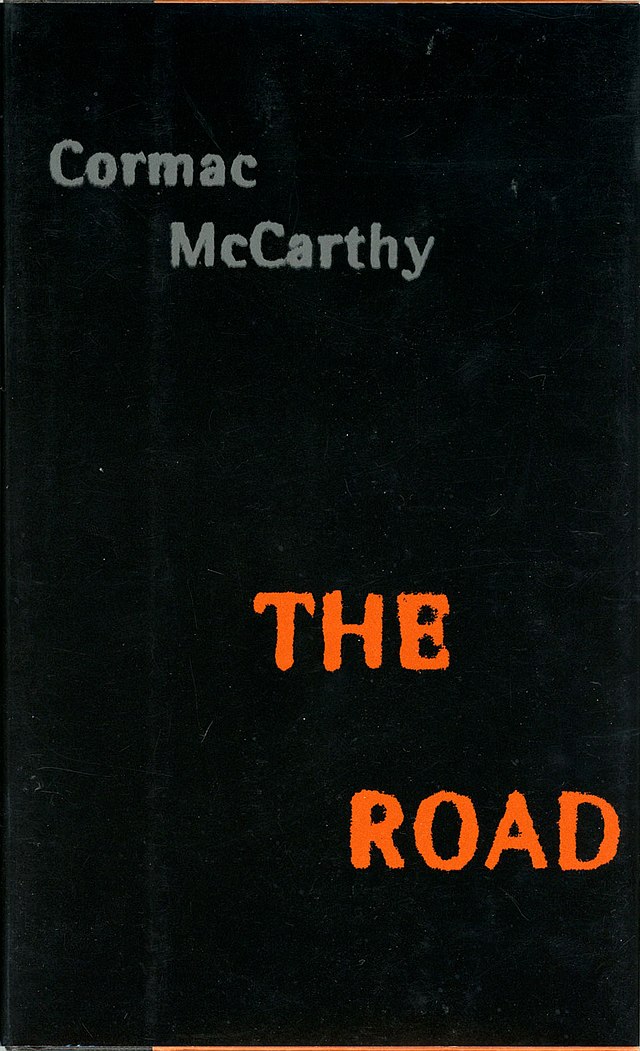
First edition of McCarthy's tenth novel, *[The Road](https://www.wikiwand.com/en/articles/The_Road "The Road")* (2006), for which he received the [Pulitzer Prize for Fiction](https://www.wikiwand.com/en/articles/Pulitzer_Prize_for_Fiction "Pulitzer Prize for Fiction")
McCarthy published the play *[The Sunset Limited](https://www.wikiwand.com/en/articles/The_Sunset_Limited "The Sunset Limited")* in 2006. Critics noted it was unorthodox and may have had more in common with a novel, hence McCarthy's subtitle: "a novel in dramatic form".[^brilliant-56][^zinoman-57] He later adapted it into a screenplay for a [2011 film](https://www.wikiwand.com/en/articles/The_Sunset_Limited_\(film\) "The Sunset Limited (film)"), directed and executive produced by [Tommy Lee Jones](https://www.wikiwand.com/en/articles/Tommy_Lee_Jones "Tommy Lee Jones"), who also starred opposite [Samuel L. Jackson](https://www.wikiwand.com/en/articles/Samuel_L._Jackson "Samuel L. Jackson").[^zinoman-57][^brilliant-56] [Oprah Winfrey](https://www.wikiwand.com/en/articles/Oprah_Winfrey "Oprah Winfrey") selected McCarthy's *The Road* as the April 2007 selection for her [Book Club](https://www.wikiwand.com/en/articles/Oprah's_Book_Club "Oprah's Book Club").[^cowley-1][^58] As a result, McCarthy agreed to his first television interview, which aired on *[The Oprah Winfrey Show](https://www.wikiwand.com/en/articles/The_Oprah_Winfrey_Show "The Oprah Winfrey Show")* on June 5, 2007. The interview took place in the library of the [Santa Fe Institute](https://www.wikiwand.com/en/articles/Santa_Fe_Institute "Santa Fe Institute"). McCarthy told Winfrey that he did not know any writers and much preferred the company of scientists. During the interview, he related several stories illustrating the degree of outright poverty he endured at times during his career as a writer. He also spoke about the experience of fathering a child at an advanced age, and how his son was the inspiration for *The Road*.[^conlon_2007-59]
In 2012, McCarthy sold his original screenplay *[The Counselor](https://www.wikiwand.com/en/articles/The_Counselor "The Counselor")* to [Nick Wechsler](https://www.wikiwand.com/en/articles/Nick_Wechsler_\(producer\) "Nick Wechsler (producer)"), Paula Mae Schwartz, and Steve Schwartz, who had previously produced the film adaptation of McCarthy's novel *The Road*.[^60] Directed by [Ridley Scott](https://www.wikiwand.com/en/articles/Ridley_Scott "Ridley Scott"), with the production finished in 2012, the film was released on October 25, 2013, to polarized critical reception. [Mark Kermode](https://www.wikiwand.com/en/articles/Mark_Kermode "Mark Kermode") of *[The Guardian](https://www.wikiwand.com/en/articles/The_Guardian "The Guardian")* found it "datedly naff",[^61] and [Peter Travers](https://www.wikiwand.com/en/articles/Peter_Travers "Peter Travers") of *[Rolling Stone](https://www.wikiwand.com/en/articles/Rolling_Stone "Rolling Stone")* described it as "a droning meditation on capitalism".[^62] However, [Manohla Dargis](https://www.wikiwand.com/en/articles/Manohla_Dargis "Manohla Dargis") of *The New York Times* found it "terrifying" and "seductive".[^63]
### Santa Fe Institute (2014–2023)
McCarthy was a trustee for the [Santa Fe Institute](https://www.wikiwand.com/en/articles/Santa_Fe_Institute "Santa Fe Institute") (SFI), a multidisciplinary research center devoted to the study of [complex adaptive systems](https://www.wikiwand.com/en/articles/Complex_adaptive_systems "Complex adaptive systems").[^64] Unlike most members of the SFI, McCarthy did not have a scientific background. As [Murray Gell-Mann](https://www.wikiwand.com/en/articles/Murray_Gell-Mann "Murray Gell-Mann") explained, "There isn't any place like the Santa Fe Institute, and there isn't any writer like Cormac, so the two fit quite well together."[^cormac_country-23] From his work at the Santa Fe Institute, McCarthy published his first piece of nonfiction writing in his 50-year writing career. In the essay entitled "[The Kekulé Problem](https://www.wikiwand.com/en/articles/The_Kekul%C3%A9_Problem "The Kekulé Problem")" (2017), McCarthy analyzes a dream of [August Kekulé](https://www.wikiwand.com/en/articles/August_Kekul%C3%A9 "August Kekulé")'s as a model of the [unconscious mind](https://www.wikiwand.com/en/articles/Unconscious_mind "Unconscious mind") and the [origins of language](https://www.wikiwand.com/en/articles/Origin_of_language "Origin of language"). He theorizes about the nature of the unconscious mind and its separation from human language. The unconscious, according to McCarthy, "is a machine for operating an animal" and "all animals have an unconscious". McCarthy postulates that language is a purely human cultural creation and not a biologically determined phenomenon.[^65]
In 2015, McCarthy's next novel, *[The Passenger](https://www.wikiwand.com/en/articles/The_Passenger_\(McCarthy_novel\) "The Passenger (McCarthy novel)")*, was announced at a multimedia event hosted in Santa Fe by the [Lannan Foundation](https://www.wikiwand.com/en/articles/Lannan_Foundation "Lannan Foundation"). The book was influenced by his time among scientists; it has been described by SFI biologist [David Krakauer](https://www.wikiwand.com/en/articles/David_Krakauer_\(scientist\) "David Krakauer (scientist)") as "full-blown Cormac 3.0—a mathematical \[and\] analytical novel". In March 2022, *The New York Times* reported that *The Passenger* would be released on October 25, 2022, and a second companion novel, *[Stella Maris](https://www.wikiwand.com/en/articles/Stella_Maris_\(novel\) "Stella Maris (novel)")*, on November 22.[^alter-6] The latter was McCarthy's first novel since *[Outer Dark](https://www.wikiwand.com/en/articles/Outer_Dark "Outer Dark")* to feature a female protagonist.[^newsweek.com-26]
At the time of his death, McCarthy was listed as an executive producer on a film adaption of *Blood Meridian*, to be directed by [John Hillcoat](https://www.wikiwand.com/en/articles/John_Hillcoat "John Hillcoat"), who previously directed the film adaptation of *The Road.*[^66]
## Writing approach and style
### Syntax
> He left the beer on the counter and went out and got the two packs of cigarettes and the binoculars and the pistol and slung the .270 over his shoulder and shut the truck door and came back in.
—Cormac McCarthy's [polysyndetic](https://www.wikiwand.com/en/articles/Polysyndeton "Polysyndeton") use of "and" in *[No Country for Old Men](https://www.wikiwand.com/en/articles/No_Country_for_Old_Men_\(novel\) "No Country for Old Men (novel)")*
McCarthy used punctuation sparsely, even replacing most commas with "and" to create [polysyndetons](https://www.wikiwand.com/en/articles/Polysyndeton "Polysyndeton");[^67] it has been called "the most important word in McCarthy's lexicon".[^cowley-1] He told Oprah Winfrey that he preferred "simple declarative sentences" and that he used capital letters, periods, an occasional comma, or a colon for setting off a list, but never semicolons, which he labeled as "idiocy".[^cormac_country-23][^68] He did not use quotation marks for dialogue and believed there is no reason to "blot the page up with weird little marks".[^69] Erik Hage notes that McCarthy's dialogue often lacks attribution, but that "somehow ... the reader remains oriented as to who is speaking."[^70] His attitude to punctuation dated to some editing work he did for a professor of English while enrolled at the University of Tennessee; he stripped out much of the punctuation in the book being edited, which pleased the professor.[^71] McCarthy edited fellow Santa Fe Institute Fellow [W. Brian Arthur](https://www.wikiwand.com/en/articles/W._Brian_Arthur "W. Brian Arthur")'s influential article "Increasing Returns and the New World of Business", published in the *[Harvard Business Review](https://www.wikiwand.com/en/articles/Harvard_Business_Review "Harvard Business Review")* in 1996, removing commas from the text.[^72] He also [copy edited](https://www.wikiwand.com/en/articles/Copy_editing "Copy editing") work for physicists [Lawrence M. Krauss](https://www.wikiwand.com/en/articles/Lawrence_M._Krauss "Lawrence M. Krauss") and [Lisa Randall](https://www.wikiwand.com/en/articles/Lisa_Randall "Lisa Randall").[^73]
[Saul Bellow](https://www.wikiwand.com/en/articles/Saul_Bellow "Saul Bellow") praised his "absolutely overpowering use of language, his life-giving and death-dealing sentences".[^74] [Richard B. Woodward](https://www.wikiwand.com/en/articles/Richard_B._Woodward "Richard B. Woodward") has described his writing as "reminiscent of early [Hemingway](https://www.wikiwand.com/en/articles/Ernest_Hemingway "Ernest Hemingway")".[^woodward-12] Unlike earlier works such as *Suttree* and *Blood Meridian*, the majority of McCarthy's work after 1993 uses simple, restrained vocabulary.[^cowley-1]
### Themes
> There's no such thing as life without bloodshed. The notion that the species can be improved in some way, that everyone could live in harmony, is a really dangerous idea. Those who are afflicted with this notion are the first ones to give up their souls, their freedom. Your desire that it be that way will enslave you and make your life vacuous.
Cormac McCarthy, interviewed in the *New York Times* (April 19, 1992)[^woodward_nyt-75]
McCarthy's novels often depict explicit violence.[^adams-15] Many of his works have been characterized as [nihilistic](https://www.wikiwand.com/en/articles/Nihilistic "Nihilistic"),[^76] particularly *Blood Meridian*.[^77] Some academics dispute this, saying *Blood Meridian* is actually a [gnostic](https://www.wikiwand.com/en/articles/Gnostic "Gnostic") tragedy.[^78][^79] His later works have been characterized as highly moralistic. [Erik J. Wielenberg](https://www.wikiwand.com/en/articles/Erik_J._Wielenberg "Erik J. Wielenberg") argues that *The Road* depicts morality as secular and originating from individuals, such as the father, and separate from God.[^80]
The bleak outlook of the future, and the inhuman foreign antagonist [Anton Chigurh](https://www.wikiwand.com/en/articles/Anton_Chigurh "Anton Chigurh") of *[No Country for Old Men](https://www.wikiwand.com/en/articles/No_Country_for_Old_Men "No Country for Old Men")*, is said to reflect the apprehension of the [post-9/11](https://www.wikiwand.com/en/articles/Post-9/11 "Post-9/11") era.[^81] Many of his works portray individuals in conflict with society and acting on instinct rather than on emotion or thought.[^82] Another theme throughout many of McCarthy's works is the ineptitude or inhumanity of those in authority and particularly in law enforcement. This is seen in *Blood Meridian* with the murder spree the [Glanton Gang](https://www.wikiwand.com/en/articles/Glanton_Gang "Glanton Gang") initiates because of the bounties, the "overwhelmed" law enforcement in *No Country for Old Men*, and the corrupt police officers in *All the Pretty Horses*.[^83] As a result, he has been labeled the "great pessimist of American literature".[^adams-15]
### Bilingual narrative practice
McCarthy was fluent in Spanish, having lived in Ibiza, Spain, in the 1960s and later residing in El Paso, Texas, and Santa Fe, New Mexico.[^muse.jhu.edu-84] Isabel Soto argues that after he learned the language, in his novels "Spanish and English modulate or permeate each other", as it was "an essential part of McCarthy's expressive discourse".[^85] Katherine Sugg observes that McCarthy's writing is "often considered a 'multicultural' and 'bilingual' narrative practice, particularly for its abundant use of untranslated Spanish dialogue".[^86] Jeffrey Herlihy-Mera observes, "John Grady Cole is a native speaker of Spanish. This is also the case of several other important characters in the *Border Trilogy*, including Billy Parhnam \[*[sic](https://www.wikiwand.com/en/articles/Sic "Sic")*\], John Grady's mother (and possibly his grandfather and brothers), and perhaps Jimmy Blevins, each of whom are speakers of Spanish who were ostensibly born in the US political space into families with what are generally considered English-speaking surnames ... This is also the case of [Judge Holden](https://www.wikiwand.com/en/articles/Judge_Holden "Judge Holden") in *Blood Meridian*."[^muse.jhu.edu-84]
### Work ethic and process
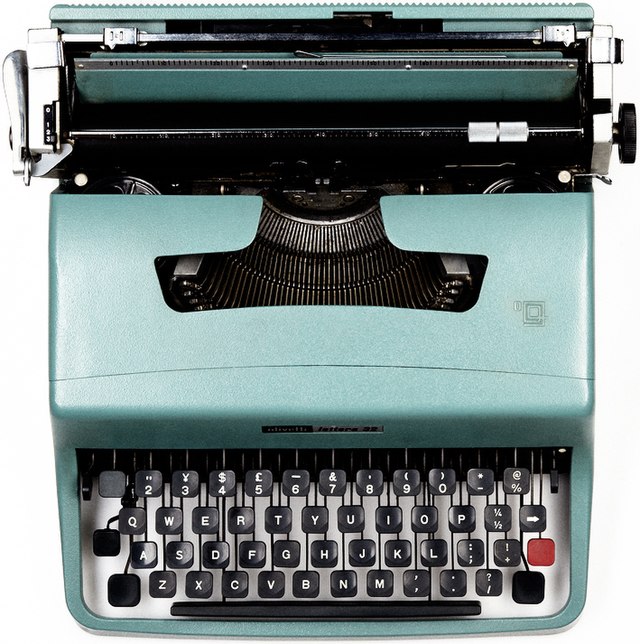
McCarthy wrote all of his fiction and correspondence with a single [Olivetti Lettera 32](https://www.wikiwand.com/en/articles/Olivetti_Lettera_32 "Olivetti Lettera 32") typewriter between the early 1960s and 2009. At that time he replaced it with an identical model.[^cohen_2009-87]
McCarthy dedicated himself to writing full time, choosing not to work other jobs to support his career. "I always knew that I didn't want to work", McCarthy said. "You have to be dedicated, but it was my number-one priority."[^88] Early in his career, his decision not to work sometimes subjected him and his family to poverty.[^conlon_2007-59]
Nevertheless, according to scholar Steve Davis, McCarthy had an "incredible [work ethic](https://www.wikiwand.com/en/articles/Work_ethic "Work ethic")".[^davis_2010-89] He preferred to work on several projects simultaneously and said, for instance, that he had four drafts in progress in the mid-2000s and for several years devoted about two hours every day to each project.[^cohen_2009-87] He was known to conduct exhaustive research on the historical [settings](https://www.wikiwand.com/en/articles/Setting_\(narrative\) "Setting (narrative)") and regional environments found in his fiction.[^90] He edited his own writing, sometimes [revising](https://www.wikiwand.com/en/articles/Revision_\(writing\) "Revision (writing)") a book over the course of years or decades before deeming it fit for publication.[^davis_2010-89] While his research and revision were meticulous, he did not outline his plots and instead viewed writing as a "[subconscious](https://www.wikiwand.com/en/articles/Subconscious "Subconscious") process" which should be given space for spontaneous inspiration.[^kushner-17]
After 1958, McCarthy wrote all of his literary work and correspondence with a mechanical [typewriter](https://www.wikiwand.com/en/articles/Typewriter "Typewriter"). He originally used a [Royal](https://www.wikiwand.com/en/articles/Royal_Typewriter_Company "Royal Typewriter Company") but went looking for a more lightweight machine ahead of a trip to Europe in the early 1960s. He bought a portable [Olivetti Lettera 32](https://www.wikiwand.com/en/articles/Olivetti_Lettera_32 "Olivetti Lettera 32") for $50 at a Knoxville pawn shop and typed about five million words over the next five decades. He maintained it by simply "blowing out the dust with a service station hose". [Book dealer](https://www.wikiwand.com/en/articles/Book_collecting "Book collecting") Glenn Horowitz said the modest typewriter acquired "a sort of talismanic quality" through its connection to McCarthy's monumental fiction, "as if [Mount Rushmore](https://www.wikiwand.com/en/articles/Mount_Rushmore "Mount Rushmore") was carved with a [Swiss Army knife](https://www.wikiwand.com/en/articles/Swiss_Army_knife "Swiss Army knife")".[^cohen_2009-87] His Olivetti was auctioned in December 2009 at [Christie's](https://www.wikiwand.com/en/articles/Christie's "Christie's"), with the auction house estimating it would fetch between $15,000 and $20,000. It sold for $254,500, with proceeds donated to the Santa Fe Institute.[^91] McCarthy replaced it with an identical model, bought for him by his friend John Miller for $11 plus $19.95 for shipping.[^cohen_2009-87]
## Personal life and views

In the 1980s, McCarthy and [Edward Abbey](https://www.wikiwand.com/en/articles/Edward_Abbey "Edward Abbey") considered covertly releasing [wolves into southern Arizona](https://www.wikiwand.com/en/articles/Mexican_wolf "Mexican wolf") to restore their decimated population.[^woodward_nyt-75]
McCarthy was a [teetotaler](https://www.wikiwand.com/en/articles/Teetotaler "Teetotaler"). According to Richard B. Woodward, "McCarthy doesn't drink anymore – he quit 16 years ago \[i.e. in 1976\] in El Paso, with one of his young girlfriends – and *Suttree* reads like a farewell to that life. 'The friends I do have are simply those who quit drinking,' he says. 'If there is an occupational hazard to writing, it's drinking'."[^woodward_nyt-75]
In the late 1990s, McCarthy moved to [Tesuque, New Mexico](https://www.wikiwand.com/en/articles/Tesuque,_New_Mexico "Tesuque, New Mexico"), north of [Santa Fe](https://www.wikiwand.com/en/articles/Santa_Fe,_New_Mexico "Santa Fe, New Mexico"), with his third wife, Jennifer Winkley, and their son, John. McCarthy and Winkley divorced in 2006.[^cormac_country-23]
In 2013, Scottish writer Michael Crossan created a Twitter account impersonating McCarthy, quickly amassing several thousand followers and recognition by former site owner [Jack Dorsey](https://www.wikiwand.com/en/articles/Jack_Dorsey "Jack Dorsey"). Five hours after the account's creation, McCarthy's publisher confirmed that the account was fake and that McCarthy did not own a computer.[^92] In 2018, another account impersonating McCarthy was created. In 2021, it was briefly marked [verified](https://www.wikiwand.com/en/articles/Twitter_verification "Twitter verification") following a viral tweet, after which his agent confirmed that the account was again a fake.[^93][^94]
In 2016, a [hoax](https://www.wikiwand.com/en/articles/Hoax "Hoax") spread on Twitter claiming that McCarthy had died, with *[USA Today](https://www.wikiwand.com/en/articles/USA_Today "USA Today")* even repeating the information.[^95][^96] The *[Los Angeles Times](https://www.wikiwand.com/en/articles/Los_Angeles_Times "Los Angeles Times")* responded to the hoax with the headline, "Cormac McCarthy isn't dead. He's too tough to die."[^97]
### Politics
McCarthy did not publicly reveal his political opinions.[^98] A resident of Santa Fe with a traditionalist disposition, he once expressed disapproval of the city and the people there: "If you don't agree with them politically, you can't just agree to disagree—they think you're crazy."[^cormac_country-23] Academic David Holloway writes that "McCarthy's writing can be read as either liberal or conservative, or as both simultaneously, depending on the politics that readers themselves bring with them to the act of reading the work".[^99]
### Science and literature
In one of his few interviews, McCarthy revealed that he respected only authors who "deal with issues of life and death", citing [Henry James](https://www.wikiwand.com/en/articles/Henry_James "Henry James") and [Marcel Proust](https://www.wikiwand.com/en/articles/Marcel_Proust "Marcel Proust") as examples of writers who do not. "I don't understand them ... To me, that's not literature. A lot of writers who are considered good I consider strange", he said.[^nytint-30] Regarding his own literary constraints when writing novels, McCarthy said he was "not a fan of some of the Latin American writers, [magical realism](https://www.wikiwand.com/en/articles/Magical_realism "Magical realism"). You know, it's hard enough to get people to believe what you're telling them without making it impossible. It has to be vaguely plausible."[^100] He cited *[Moby-Dick](https://www.wikiwand.com/en/articles/Moby-Dick "Moby-Dick")* (1851) as his favorite novel.[^cormac_country-23] Along with *Moby-Dick*, McCarthy regarded *[The Brothers Karamazov](https://www.wikiwand.com/en/articles/The_Brothers_Karamazov "The Brothers Karamazov")* (1880), [*Ulysses*](https://www.wikiwand.com/en/articles/Ulysses_\(novel\) "Ulysses (novel)") (1922), and *[The Sound and the Fury](https://www.wikiwand.com/en/articles/The_Sound_and_the_Fury "The Sound and the Fury")* (1929) as "great" novels.[^kushner-17]
Socially, McCarthy had an aversion to other writers, preferring the company of scientists. He voiced his admiration for scientific advances: "What physicists did in the 20th century was one of the extraordinary flowerings ever in the human enterprise."[^cormac_country-23] At MacArthur reunions, McCarthy shunned his fellow writers to fraternize instead with scientists like physicist [Murray Gell-Mann](https://www.wikiwand.com/en/articles/Murray_Gell-Mann "Murray Gell-Mann") and whale biologist [Roger Payne](https://www.wikiwand.com/en/articles/Roger_Payne "Roger Payne"). Of all of his interests, McCarthy stated, "Writing is way, way down at the bottom of the list."[^nytint-30]
### Death
McCarthy died at his home in Santa Fe on June 13, 2023, at the age of 89.[^nprobit-101][^102][^103][^104] [Stephen King](https://www.wikiwand.com/en/articles/Stephen_King "Stephen King") said McCarthy was "maybe the greatest American novelist of my time ... He was full of years and created a fine body of work, but I still mourn his passing."[^105]
In 2003, literary critic [Harold Bloom](https://www.wikiwand.com/en/articles/Harold_Bloom "Harold Bloom") named McCarthy as one of the four major living American novelists, alongside [Don DeLillo](https://www.wikiwand.com/en/articles/Don_DeLillo "Don DeLillo"), [Thomas Pynchon](https://www.wikiwand.com/en/articles/Thomas_Pynchon "Thomas Pynchon"), and [Philip Roth](https://www.wikiwand.com/en/articles/Philip_Roth "Philip Roth").[^bloom-106] Bloom's 1994 book *[The Western Canon](https://en.wikipedia.org/wiki/The_Western_Canon:_The_Books_and_School_of_the_Ages?oldformat=true "The Western Canon: The Books and School of the Ages")* had listed *Child of God*, *Suttree*, and *Blood Meridian* among the works of contemporary literature he predicted would endure and become "[canonical](https://www.wikiwand.com/en/articles/Western_canon "Western canon")".[^107] Bloom reserved his highest praise for *Blood Meridian*, which he called "the greatest single book since Faulkner's *[As I Lay Dying](https://www.wikiwand.com/en/articles/As_I_Lay_Dying "As I Lay Dying")*", and though he held less esteem for McCarthy's other novels he said that "to have written even one book so authentically strong and allusive, and capable of the perpetual reverberation that *Blood Meridian* possesses more than justifies him. ... He has attained genius with that book."[^108]
A comprehensive archive of McCarthy's personal papers is preserved at the [Wittliff Collections](https://www.wikiwand.com/en/articles/Wittliff_Collections "Wittliff Collections"), [Texas State University](https://www.wikiwand.com/en/articles/Texas_State_University "Texas State University"), San Marcos, Texas. The McCarthy papers consists of 98 boxes (46 linear feet).[^alek-109] The acquisition of the Cormac McCarthy Papers resulted from years of ongoing conversations between McCarthy and Southwestern Writers Collection founder, [Bill Wittliff](https://www.wikiwand.com/en/articles/Bill_Wittliff "Bill Wittliff"), who negotiated the proceedings.[^110] The Southwestern Writers Collection/Wittliff Collections also holds The Woolmer Collection of Cormac McCarthy, which consists of letters between McCarthy and bibliographer J. Howard Woolmer,[^wittliff-111] and four other related collections.[^wittliff-111][^112]
**Novels**
**More information** # ...
| # | Denotes an entry in *[The Border Trilogy](https://www.wikiwand.com/en/articles/The_Border_Trilogy "The Border Trilogy")* | # | Denotes an entry in *The Passenger Series* |
| --- | --- | --- | --- |
Close
**More information** Title, Notes ...
Close
[^46]:
[^50]: The concept of post-apocalyptic cannibals spawned from a discussion McCarthy had with his brother.[^49]